Thinkers and political figures
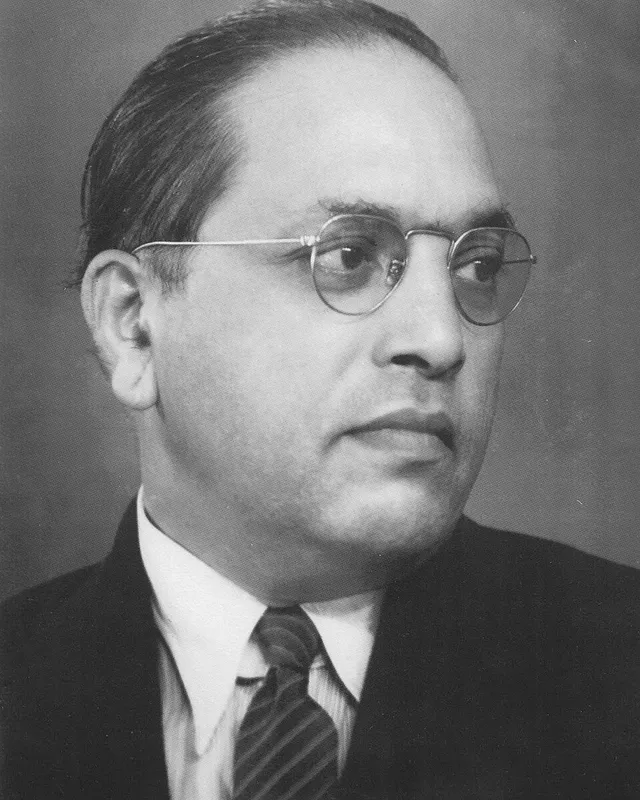
Portrait: Via Wikimedia Commons (opens in a new tab) · Public domain
B. R. Ambedkar
- Country
- India
- Era
- 1891–1956
- Tradition
- Social liberalism, anti-caste radicalism
Chaired the drafting committee of the Constitution of India, argued that political democracy is empty without social and economic democracy, and made the most systematic case against caste.
01
Documented positions
Documented positions come from the sources listed. Similarity is this project’s inference from those positions, and is a much weaker claim.
- Constitutional guarantees of equality, and the abolition of untouchability (Article 17)
- Political democracy is unsustainable without social and economic democracy (final address to the Constituent Assembly, 1949)
- Advocated state ownership of key industries and land in "States and Minorities" (1947)
- Argued caste cannot be reformed away and must be annihilated, including through inter-marriage
- Championed separate safeguards and reservation for Scheduled Castes
02
Where it sits on each dimension
Wealth and inequality
22
RedistributionMarket outcomes
Evidence: Well documented
The state in the economy
26
Active stateLimited state
Evidence: Well documented
Personal liberty
82
Collective orderIndividual freedom
Evidence: Well documented
Tradition and change
94
ContinuityReform
Evidence: Well documented
Nation and the world
40
InternationalistNationalist
Evidence: Documented
Religion and the state
18
Secular stateReligion in public life
Evidence: Well documented
Power and its limits
90
Concentrated authorityChecks and pluralism
Evidence: Well documented
Crime and punishment
70
PunishmentRehabilitation
Evidence: Documented
Dimensions left unscored, for want of evidence: Environment and growth
Sources
- B. R. Ambedkar, Annihilation of Caste · 1936
- B. R. Ambedkar, States and Minorities · 1947
- Constituent Assembly Debates, Volume XI · Constituent Assembly of India · 1949
Last verified: