Thinkers and political figures
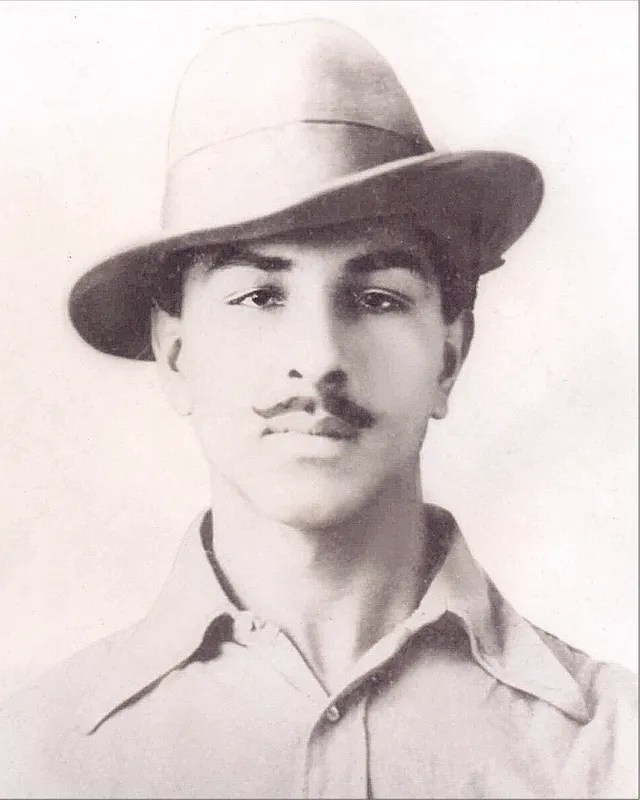
Portrait: Ram Nath, 1929, via Wikimedia Commons (opens in a new tab) · Public domain
Bhagat Singh
- Country
- India
- Era
- 1907–1931
- Tradition
- Revolutionary socialism, atheism
A socialist revolutionary hanged at twenty-three, who argued that replacing British rulers with Indian ones would change nothing unless the economic order changed with it.
01
Documented positions
Documented positions come from the sources listed. Similarity is this project’s inference from those positions, and is a much weaker claim.
- Independence must be socialist, or it merely transfers power to Indian capitalists ("To Young Political Workers", 1931)
- Threw non-lethal bombs in the Central Legislative Assembly in 1929 to "make the deaf hear", and surrendered deliberately
- Declared himself an atheist and rejected religion in politics ("Why I Am an Atheist", 1930)
- Opposed communalism as a tool used to divide the working class
- Argued for the abolition of caste alongside the abolition of class
02
Where it sits on each dimension
Wealth and inequality
6
RedistributionMarket outcomes
Evidence: Well documented
The state in the economy
16
Active stateLimited state
Evidence: Documented
Personal liberty
62
Collective orderIndividual freedom
Evidence: Documented
Tradition and change
90
ContinuityReform
Evidence: Well documented
Nation and the world
74
InternationalistNationalist
Evidence: Well documented
Religion and the state
2
Secular stateReligion in public life
Evidence: Well documented
Dimensions left unscored, for want of evidence: Environment and growth, Crime and punishment, Power and its limits
Sources
- Bhagat Singh, Why I Am an Atheist · 1930
- Bhagat Singh, To Young Political Workers · 1931
- S. Irfan Habib, To Make the Deaf Hear: Ideology and Programme of Bhagat Singh and His Comrades · 2007
Last verified: