Thinkers and political figures
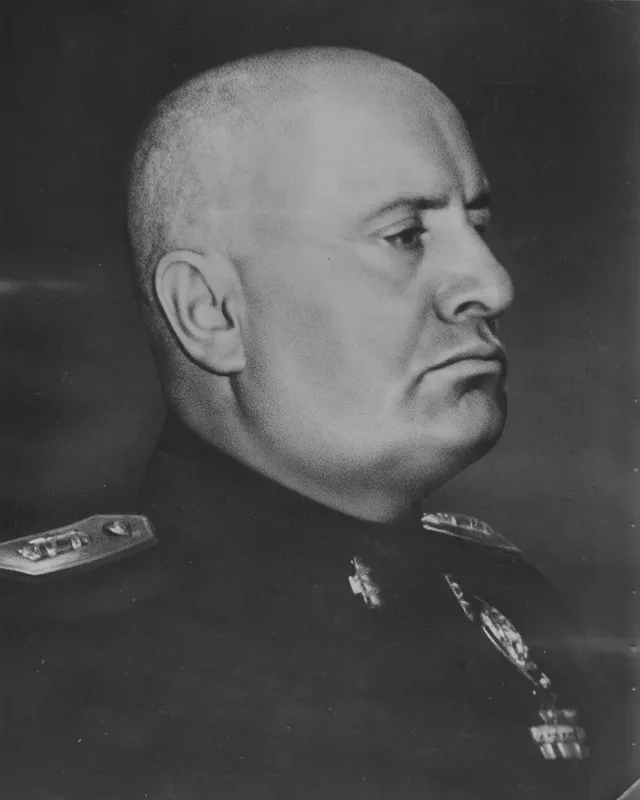
Portrait: Via Wikimedia Commons (opens in a new tab) · Public domain
Benito Mussolini
- Country
- Italy
- Era
- 1883–1945
- Tradition
- Fascism
Founded Fascism and ruled Italy as a dictator from 1925, abolishing opposition parties and independent unions, invading Ethiopia and enacting racial laws.
01
Documented positions
Documented positions come from the sources listed. Similarity is this project’s inference from those positions, and is a much weaker claim.
- The total subordination of the individual to the state (The Doctrine of Fascism, 1932)
- Abolition of opposition parties, free press and independent trade unions
- A corporatist economy: private ownership retained under state direction
- Colonial expansion, including the invasion of Ethiopia in 1935
02
Where it sits on each dimension
Wealth and inequality
45
RedistributionMarket outcomes
Evidence: Documented
The state in the economy
20
Active stateLimited state
Evidence: Well documented
Personal liberty
4
Collective orderIndividual freedom
Evidence: Well documented
Tradition and change
15
ContinuityReform
Evidence: Well documented
Nation and the world
96
InternationalistNationalist
Evidence: Well documented
Religion and the state
62
Secular stateReligion in public life
Evidence: Documented
Power and its limits
3
Concentrated authorityChecks and pluralism
Evidence: Well documented
Crime and punishment
8
PunishmentRehabilitation
Evidence: Well documented
Dimensions left unscored, for want of evidence: Environment and growth
Sources
- Benito Mussolini and Giovanni Gentile, The Doctrine of Fascism · 1932
- R. J. B. Bosworth, Mussolini's Italy · Allen Lane · 2005
Last verified: