Thinkers and political figures
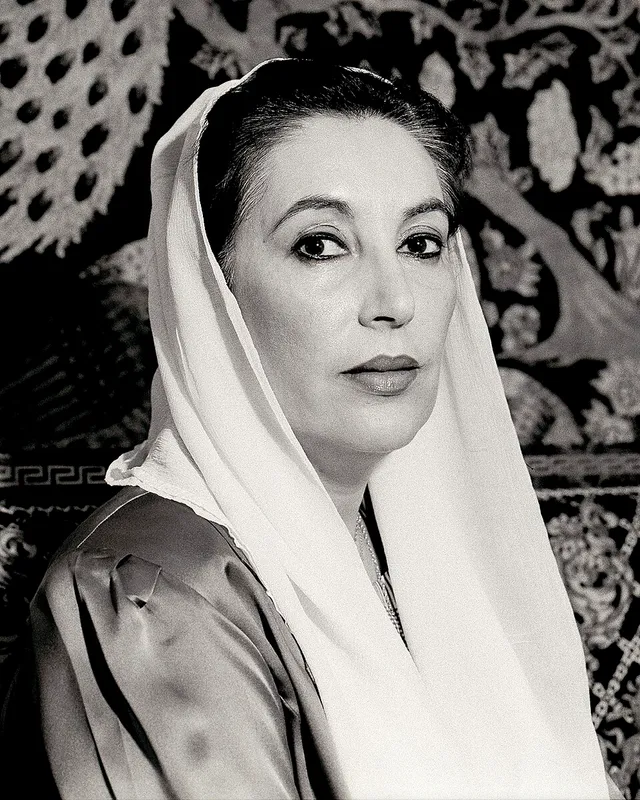
Portrait: Oliver Mark, via Wikimedia Commons (opens in a new tab) · Creative Commons Attribution-ShareAlike 4.0
Benazir Bhutto
- Country
- Pakistan
- Era
- 1953–2007
- Tradition
- Social democracy, liberal reform
The first woman to head a government in a Muslim-majority country, twice elected and twice dismissed, who was assassinated campaigning for a third term.
01
Documented positions
Documented positions come from the sources listed. Similarity is this project’s inference from those positions, and is a much weaker claim.
- Campaigned for the restoration of parliamentary democracy after eleven years of military rule under Zia
- Reversed the ban on student and trade unions and released political prisoners on taking office in 1988
- Pursued liberalisation and privatisation in her second term, reversing much of her father’s nationalisation
- Established women’s police stations and appointed women judges, while leaving the Hudood Ordinances in place
- Supported the Taliban’s early rise in Afghanistan as a stabilising force, a decision she later defended and qualified
- Argued that Islam and democracy are compatible and that the clerical reading of Islamic law was a political construction
02
Where it sits on each dimension
Wealth and inequality
42
RedistributionMarket outcomes
Evidence: Documented
The state in the economy
55
Active stateLimited state
Evidence: Documented
Personal liberty
66
Collective orderIndividual freedom
Evidence: Documented
Tradition and change
78
ContinuityReform
Evidence: Well documented
Nation and the world
60
InternationalistNationalist
Evidence: Documented
Religion and the state
40
Secular stateReligion in public life
Evidence: Documented
Power and its limits
74
Concentrated authorityChecks and pluralism
Evidence: Well documented
Dimensions left unscored, for want of evidence: Environment and growth, Crime and punishment
Sources
- Benazir Bhutto, Daughter of Destiny: An Autobiography · 1989
- Benazir Bhutto, Reconciliation: Islam, Democracy, and the West · 2008
Last verified: