Thinkers and political figures
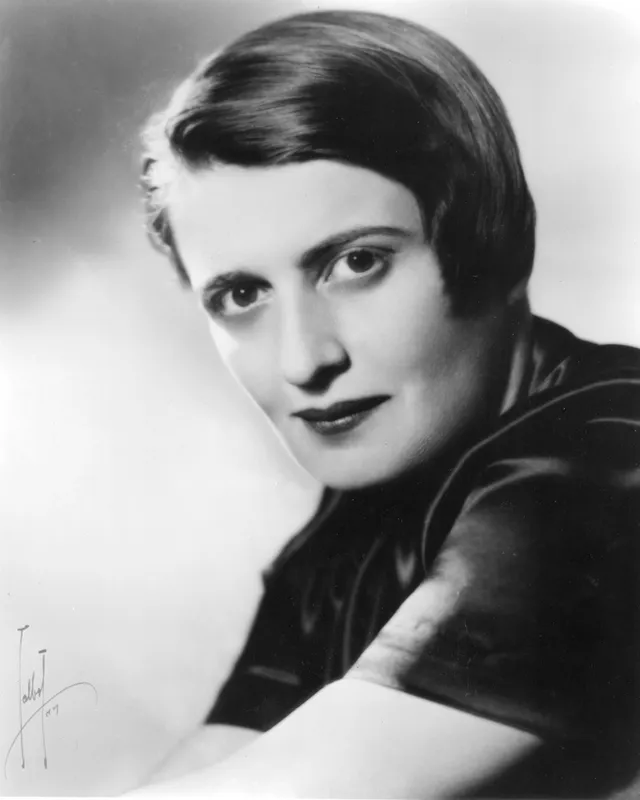
Portrait: Talbot portrait, 1943, via Wikimedia Commons (opens in a new tab) · Public domain
Ayn Rand
- Country
- Russia and the United States
- Era
- 1905–1982
- Tradition
- Objectivism
Novelist and philosopher whose defence of rational self-interest and unregulated capitalism has had far more influence on popular political argument, particularly in the United States, than on academic philosophy.
01
Documented positions
Documented positions come from the sources listed. Similarity is this project’s inference from those positions, and is a much weaker claim.
- Held that rational self-interest is a virtue and altruism a moral error
- Argued for laissez-faire capitalism with the state confined to police, courts and defence
- Held that no one may initiate force against another, and that all economic relations should be voluntary
- Rejected religion entirely, arguing that faith is incompatible with reason
- Opposed conscription, censorship and anti-sodomy laws as violations of individual rights
- Opposed public education, public health provision and antitrust law as illegitimate uses of state power
02
Where it sits on each dimension
Wealth and inequality
98
RedistributionMarket outcomes
Evidence: Well documented
The state in the economy
98
Active stateLimited state
Evidence: Well documented
Personal liberty
82
Collective orderIndividual freedom
Evidence: Well documented
Tradition and change
45
ContinuityReform
Evidence: Documented
Nation and the world
55
InternationalistNationalist
Evidence: Documented
Religion and the state
2
Secular stateReligion in public life
Evidence: Well documented
Environment and growth
12
Production firstProtection first
Evidence: Documented
Dimensions left unscored, for want of evidence: Power and its limits, Crime and punishment
Sources
- Ayn Rand, Atlas Shrugged · 1957
- Ayn Rand, The Virtue of Selfishness · 1964
- Jennifer Burns, Goddess of the Market: Ayn Rand and the American Right · Oxford University Press · 2009
Last verified: