Thinkers and political figures
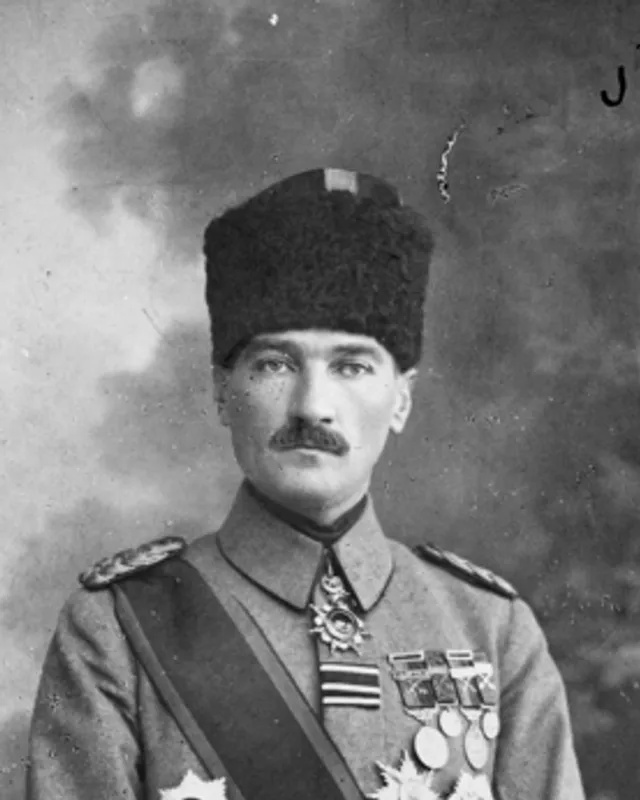
Portrait: Via Wikimedia Commons (opens in a new tab) · Public domain
Mustafa Kemal Atatürk
- Country
- Turkey
- Era
- 1881–1938
- Tradition
- Secular nationalism, single-party modernisation
Founded the Turkish republic and imposed a rapid secular and legal transformation from above, under single-party rule, extending civil rights to women while suppressing political opposition.
01
Documented positions
Documented positions come from the sources listed. Similarity is this project’s inference from those positions, and is a much weaker claim.
- Abolished the caliphate in 1924 and removed Islam as the state religion
- Replaced Islamic law with civil, criminal and commercial codes adapted from European models
- Extended the vote to women in 1930 (municipal) and 1934 (national), ahead of several European states
- Governed through a single party, with opposition parties closed after brief experiments
- Pursued a foreign policy of non-expansion: "peace at home, peace in the world"
02
Where it sits on each dimension
Wealth and inequality
42
RedistributionMarket outcomes
Evidence: Documented
The state in the economy
32
Active stateLimited state
Evidence: Well documented
Personal liberty
30
Collective orderIndividual freedom
Evidence: Well documented
Tradition and change
82
ContinuityReform
Evidence: Well documented
Nation and the world
82
InternationalistNationalist
Evidence: Well documented
Religion and the state
4
Secular stateReligion in public life
Evidence: Well documented
Power and its limits
20
Concentrated authorityChecks and pluralism
Evidence: Well documented
Dimensions left unscored, for want of evidence: Environment and growth, Crime and punishment
Sources
- Turkish Civil Code · Republic of Turkey · 1926
- Erik-Jan Zürcher, Turkey: A Modern History · 2004
Last verified: