Thinkers and political figures
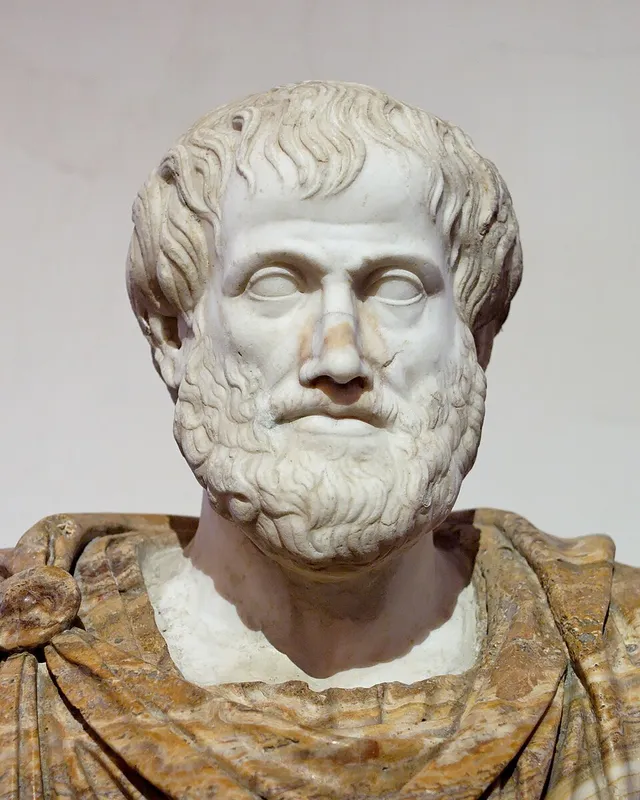
Portrait: Roman copy after Lysippos, photograph by Jastrow, via Wikimedia Commons (opens in a new tab) · Public domain
Aristotle
- Country
- Macedon and Athens
- Era
- 384–322 BCE
- Tradition
- Classical republicanism
The first systematic comparative political scientist, who collected the constitutions of 158 states and concluded that stable government rests on a large middle class rather than on rule by the rich or the poor.
Documented positions
Documented positions come from the sources listed. Similarity is this project’s inference from those positions, and is a much weaker claim.
- Held that humans are political animals who can only fully develop within a political community
- Argued that the most stable constitution is a mixed one dominated by a broad middle class
- Classified rule by one, few and many, each with a corrupted form, and judged them by whether they served the common good
- Held that the rule of law is preferable to the rule of any individual, however wise
- Defended slavery as natural for some people — a position rejected here and recorded because it was his
- Treated extreme concentrations of wealth as politically destabilising
Where it sits on each dimension
Personal liberty
Evidence: Documented
Tradition and change
Evidence: Documented
Power and its limits
Evidence: Documented
Dimensions left unscored, for want of evidence: Wealth and inequality, The state in the economy, Nation and the world, Religion and the state, Environment and growth, Crime and punishment
Sources
- Aristotle, Politics · c. 350 BCE
- Aristotle, Nicomachean Ethics · c. 340 BCE
Last verified: