Thinkers and political figures
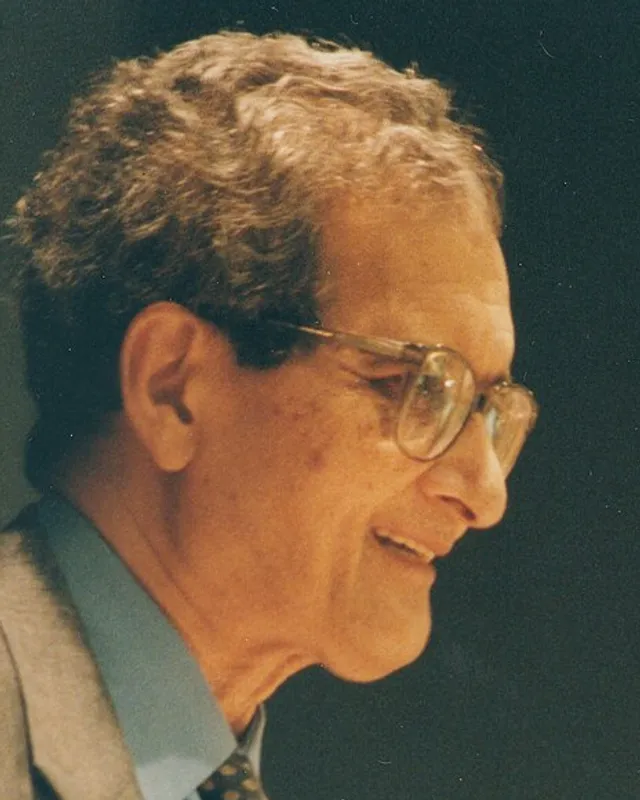
Portrait: Via Wikimedia Commons (opens in a new tab) · No known restrictions
Amartya Sen
- Country
- India
- Era
- b. 1933
- Tradition
- Social liberalism, capability approach
Recast development as the expansion of what people are actually able to do and be, and showed that famines do not occur in functioning democracies with a free press.
01
Documented positions
Documented positions come from the sources listed. Similarity is this project’s inference from those positions, and is a much weaker claim.
- Famines are failures of entitlement and information, not of food supply (Poverty and Famines, 1981)
- No substantial famine has occurred in a democracy with a free press
- Development should be measured as freedom and capability, not income alone (Development as Freedom, 1999)
- Co-designed the Human Development Index with Mahbub ul Haq
- Argued that India’s growth was not matched by investment in health and schooling
02
Where it sits on each dimension
Wealth and inequality
28
RedistributionMarket outcomes
Evidence: Well documented
The state in the economy
40
Active stateLimited state
Evidence: Well documented
Personal liberty
84
Collective orderIndividual freedom
Evidence: Well documented
Tradition and change
82
ContinuityReform
Evidence: Well documented
Nation and the world
22
InternationalistNationalist
Evidence: Well documented
Religion and the state
16
Secular stateReligion in public life
Evidence: Well documented
Power and its limits
92
Concentrated authorityChecks and pluralism
Evidence: Well documented
Environment and growth
66
Production firstProtection first
Evidence: Documented
Crime and punishment
72
PunishmentRehabilitation
Evidence: Documented
Sources
- Amartya Sen, Poverty and Famines · 1981
- Amartya Sen, Development as Freedom · 1999
- Jean Drèze and Amartya Sen, An Uncertain Glory: India and its Contradictions · 2013
Last verified: