Thinkers and political figures
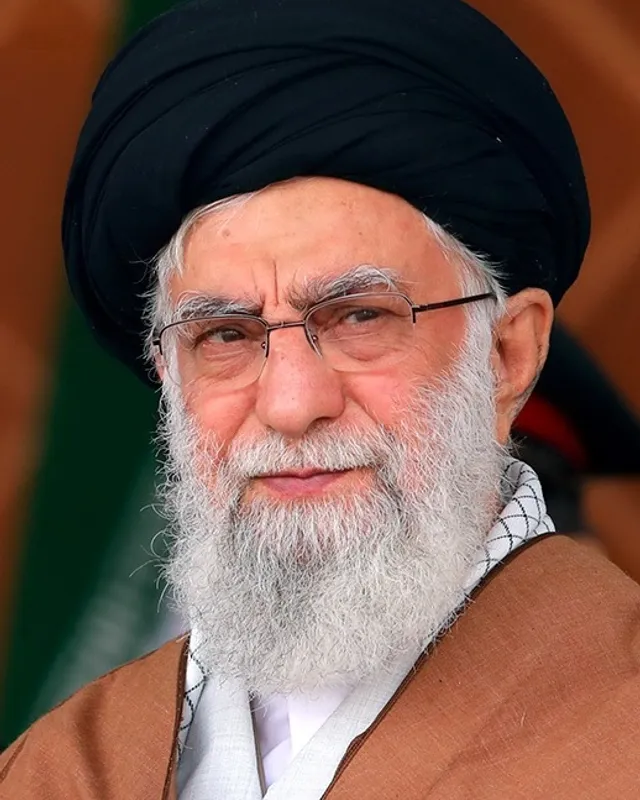
Portrait: Khamenei.ir, via Wikimedia Commons (opens in a new tab) · Creative Commons Attribution 4.0
Ali Khamenei
- Country
- Iran
- Era
- b. 1939
- Tradition
- Islamic republicanism, clerical rule
Supreme Leader of Iran since 1989, holding final authority over the armed forces, judiciary and broadcasting under the doctrine of velayat-e faqih — guardianship of the jurist.
01
Documented positions
Documented positions come from the sources listed. Similarity is this project’s inference from those positions, and is a much weaker claim.
- Velayat-e faqih: ultimate political authority vests in a senior cleric rather than an elected office
- Candidate vetting by the Guardian Council, which he half appoints, filters who may stand for election
- "Resistance economy": self-sufficiency and domestic production under sanctions
- Religious law as the basis of the legal system, including dress codes and public morality enforcement
- Opposition to United States and Israeli regional influence as a foundational foreign policy position
02
Where it sits on each dimension
Wealth and inequality
40
RedistributionMarket outcomes
Evidence: Documented
The state in the economy
26
Active stateLimited state
Evidence: Documented
Personal liberty
4
Collective orderIndividual freedom
Evidence: Well documented
Tradition and change
8
ContinuityReform
Evidence: Well documented
Nation and the world
88
InternationalistNationalist
Evidence: Well documented
Religion and the state
98
Secular stateReligion in public life
Evidence: Well documented
Power and its limits
6
Concentrated authorityChecks and pluralism
Evidence: Well documented
Crime and punishment
6
PunishmentRehabilitation
Evidence: Well documented
Dimensions left unscored, for want of evidence: Environment and growth
Sources
- Constitution of the Islamic Republic of Iran, Articles 5 and 107–112 · 1989
- V-Dem Democracy Report, Iran country profile · V-Dem Institute · 2024 Source (opens in a new tab)
Last verified: