Thinkers and political figures
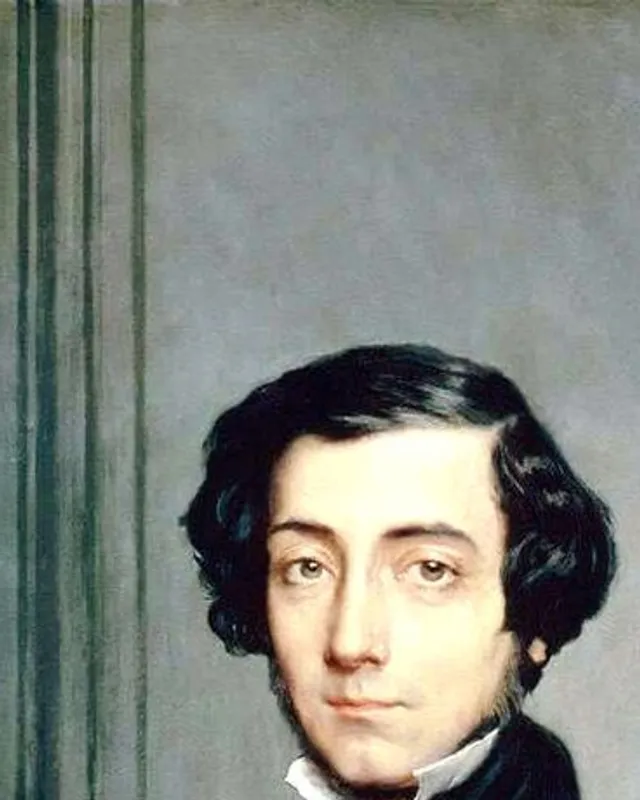
Portrait: Théodore Chassériau, via Wikimedia Commons (opens in a new tab) · Public domain
Alexis de Tocqueville
- Country
- France
- Era
- 1805–1859
- Tradition
- Liberal conservatism
Observed American democracy closely and concluded that its strength lay in local self-government and voluntary association — and its danger in the tyranny of the majority and a soft, managerial despotism.
01
Documented positions
Documented positions come from the sources listed. Similarity is this project’s inference from those positions, and is a much weaker claim.
- Voluntary associations and local self-government are what make democracy workable (Democracy in America, 1835–40)
- Warned of the "tyranny of the majority" over opinion as much as over law
- Predicted a mild but pervasive administrative despotism in equal societies
- Held that religion supports liberty precisely by staying out of government
- Opposed slavery and argued for its abolition in the French colonies
02
Where it sits on each dimension
Wealth and inequality
62
RedistributionMarket outcomes
Evidence: Documented
The state in the economy
70
Active stateLimited state
Evidence: Well documented
Personal liberty
76
Collective orderIndividual freedom
Evidence: Well documented
Tradition and change
46
ContinuityReform
Evidence: Documented
Religion and the state
58
Secular stateReligion in public life
Evidence: Well documented
Power and its limits
78
Concentrated authorityChecks and pluralism
Evidence: Well documented
Dimensions left unscored, for want of evidence: Environment and growth, Crime and punishment, Nation and the world
Sources
- Alexis de Tocqueville, Democracy in America · 1835–1840
- Alexis de Tocqueville, The Old Regime and the Revolution · 1856
Last verified: