Thinkers and political figures
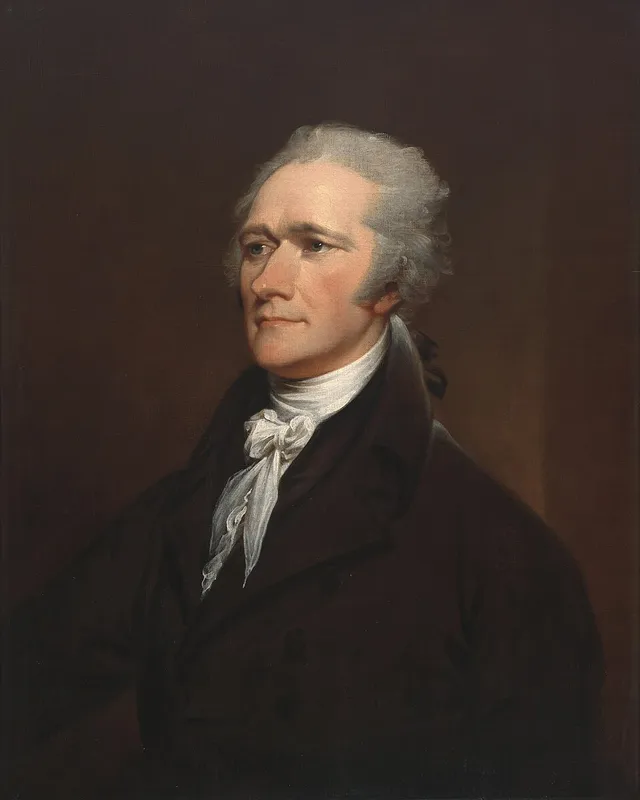
Portrait: National Portrait Gallery, via Wikimedia Commons (opens in a new tab) · Public domain
Alexander Hamilton
- Country
- United States
- Era
- 1755–1804
- Tradition
- Federalism, commercial nationalism
First Treasury Secretary, who built the financial architecture of the United States — a national bank, assumed federal debt, tariffs and industrial promotion — against Jefferson’s agrarian opposition.
01
Documented positions
Documented positions come from the sources listed. Similarity is this project’s inference from those positions, and is a much weaker claim.
- Established the First Bank of the United States and argued the Constitution granted implied powers to create it
- Had the federal government assume the states’ Revolutionary war debts to bind creditors to the national government
- Advocated protective tariffs and subsidies to build domestic manufacturing in the Report on Manufactures
- Argued for a strong, energetic executive and a broad construction of federal authority
- Was a founding member of the New York Manumission Society and opposed slavery
- Distrusted direct popular rule and favoured indirect election and long terms of office
02
Where it sits on each dimension
Wealth and inequality
68
RedistributionMarket outcomes
Evidence: Well documented
The state in the economy
46
Active stateLimited state
Evidence: Well documented
Personal liberty
52
Collective orderIndividual freedom
Evidence: Documented
Tradition and change
55
ContinuityReform
Evidence: Documented
Nation and the world
66
InternationalistNationalist
Evidence: Well documented
Power and its limits
40
Concentrated authorityChecks and pluralism
Evidence: Well documented
Dimensions left unscored, for want of evidence: Religion and the state, Environment and growth, Crime and punishment
Sources
- Alexander Hamilton, James Madison and John Jay, The Federalist Papers · 1788
- Alexander Hamilton, Report on the Subject of Manufactures · 1791
Last verified: