Thinkers and political figures
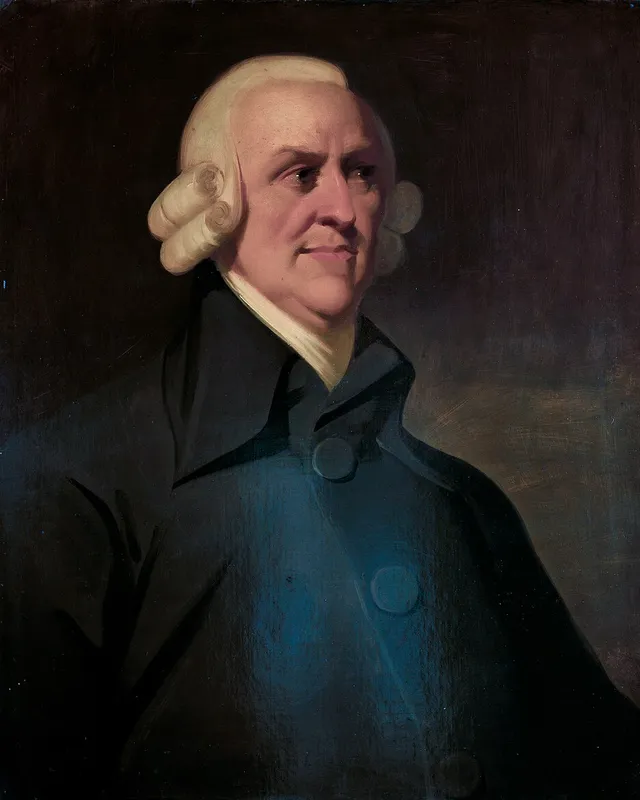
Portrait: Unknown artist ("the Muir portrait"), via Wikimedia Commons (opens in a new tab) · Public domain
Adam Smith
- Country
- Scotland
- Era
- 1723–1790
- Tradition
- Classical liberalism
Showed how decentralised exchange can coordinate an economy without central direction — while warning repeatedly about merchants combining against the public interest.
01
Documented positions
Documented positions come from the sources listed. Similarity is this project’s inference from those positions, and is a much weaker claim.
- Division of labour and free exchange raise general prosperity (Wealth of Nations, Book I)
- Warned that businessmen rarely meet without conspiring against the public
- Supported public works, public education and regulation of banking
- Argued for progressive elements in taxation: contribution in proportion to ability
02
Where it sits on each dimension
Wealth and inequality
72
RedistributionMarket outcomes
Evidence: Well documented
The state in the economy
76
Active stateLimited state
Evidence: Well documented
Personal liberty
74
Collective orderIndividual freedom
Evidence: Documented
Nation and the world
30
InternationalistNationalist
Evidence: Documented
Crime and punishment
50
PunishmentRehabilitation
Evidence: Thinly documented
Dimensions left unscored, for want of evidence: Environment and growth, Tradition and change, Power and its limits, Religion and the state
Sources
- Adam Smith, An Inquiry into the Nature and Causes of the Wealth of Nations · 1776
- Adam Smith, The Theory of Moral Sentiments · 1759
Last verified: